Header Responsivo com Logo e Menu
Tema com Título

20th August 1994 – An Eventful Day or an Odyssey Road Trip

Texto em Destaque

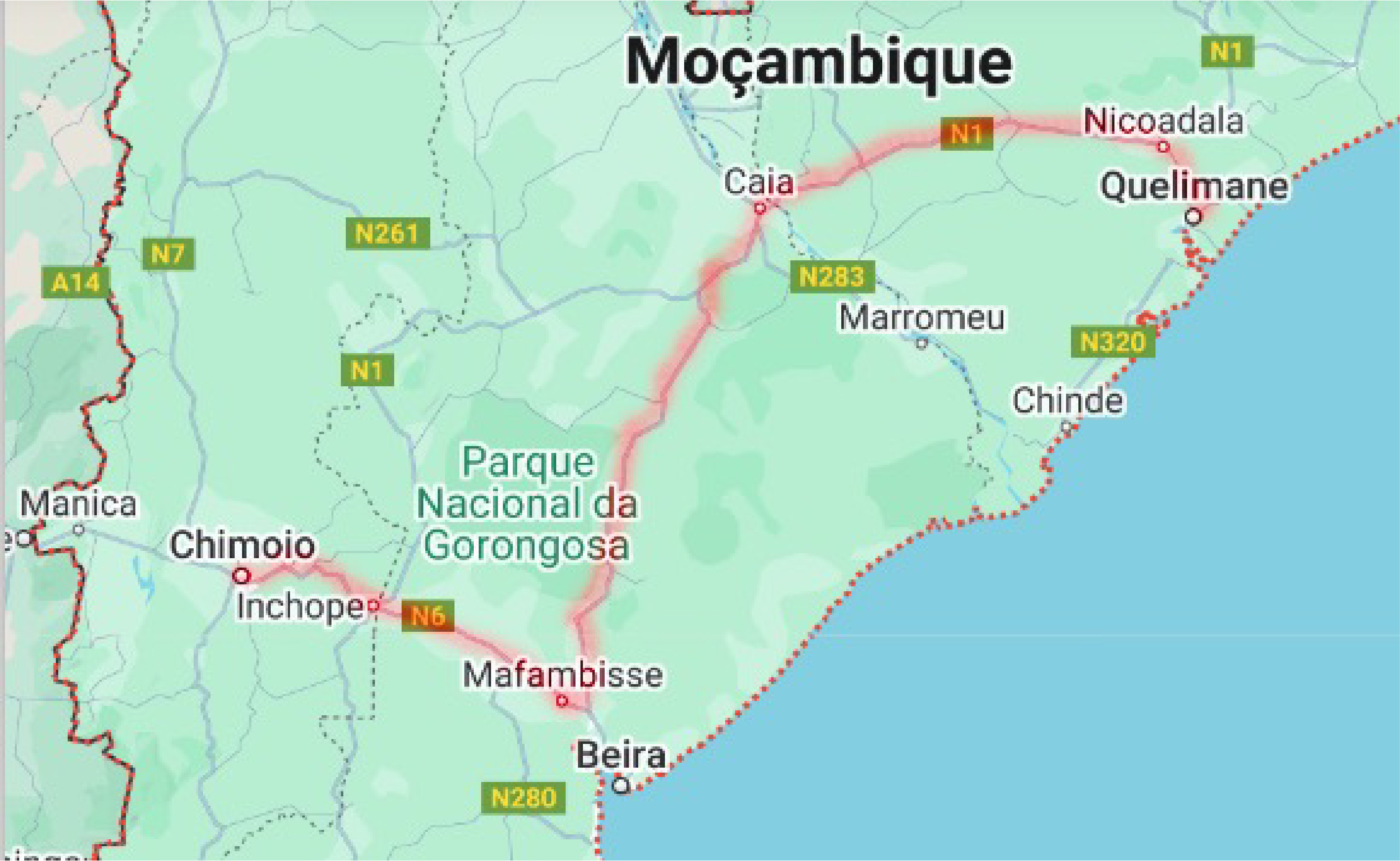
On the 20th August 1994, I left Chimoio, Manica Province capital, for Quelimane, Zambézia Province capital. At the time I was Minister of Construction and Water, a Department I had been leading since March 1987.

This followed my chairing of the 5 days Coordinating Council of the Ministry of Construction and Water.

It was a Saturday on a sunny day, typical of the season and, for the 586 km [364 miles] trip, I expected to reach my destination before sunset. My convoy comprised the delegates from Zambézia Province who had attended the Ministry Coordinating Council and were on their return trip.

The Coordinating Council is a biennual meeting in a ministry where staff take stock of activity in the two previous years.

O meu objectivo, ao viajar para Quelimane, era juntar-me à delegação do Presidente da República na sua visita à província da Zambézia, que se iniciava no dia seguinte. De Chimoio tomámos a N6 em direção a leste para Dondo, onde virámos para norte pela N282 até Inhamitanga, e juntando-nos à N1 pouco depois, seguimos em direção a Caia, uma pequena aldeia na margem sul do rio Zambeze.

After crossing the Zambezi River, we would continue on the N1 till Nicoadala, where we would take the N10 Southbound headed for Quelimane.

While the N6, N1 and N10 were paved roads, the N282 was a gravel road, generally in reasonable shape, bar a few stretches. The N6 connects the coastal city of Beira to Zimbabwe, through the Machipanda border. Along the way, lays Chimoio, Manica Province capital.

The trip was going smoothly until we came across an unexpected roadblock in Inhami-tanga, 57 km [35 miles] before reaching the Zambezi River.

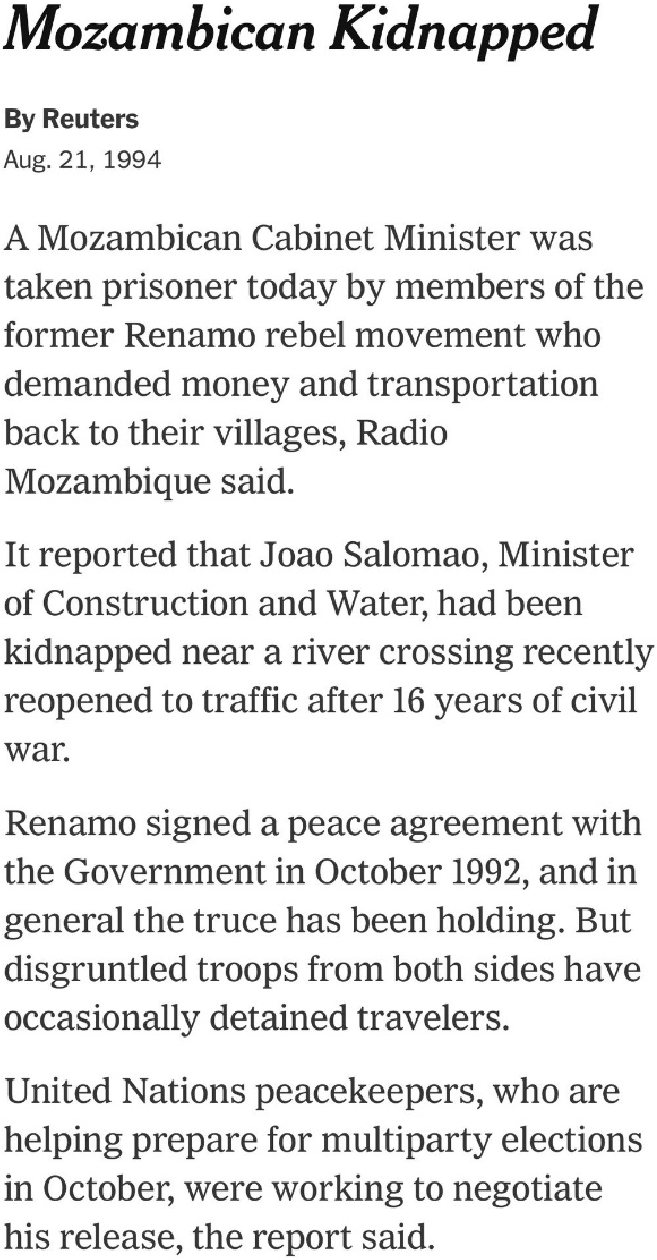
Former Renamo fighters, the rebel movement that had been fighting the Government had blocked the road claiming unkept promises from their movement.

Para contextualizar, o Acordo Geral de Paz tinha sido assinado quase dois anos antes, a 4 de Outubro de 1992, e a esses combatentes tinham sido prometidos utensílios agrícolas e sementes para regressarem às suas zonas de origem.

Relato de Viagem

Despite the title of the news clip, it was not a literal kidnapping and, instead, blocking traffic along a road. Nobody, including myself, were made prisoners but, we were captives on a road, able to remain in our vehicles but prevented from pursuing our journeys. The men who were blocking the road weren’t doing it in a coordinated manner with their leaders or higher hierarchies.

And there was no role of the UN peace mission since the roadblock was a local initiative uncoordinated with the movement headquarters with which the UN mission interacted.

These individuals embodied the reality of men who had been fighting for years for what would be their ideals and who, following the General Peace Agreement, had been demobilized and only awaited the agricultural tools and seeds and whatever money they were promised and which they looked forward to for the resumption of their life once back in the countryside.

Blocking the road was a way they had devised to express their claim and grievances against the rebel movement leadership that had made the promise but had not honoured it almost two years after the General Peace Agreement, the protesters thus bringing the issue to public attention.

And they had netted a minister by mere chance as they hadn’t anticipated a minister would be traveling that road and go through their block.

Within the cabinet, I was the minister that most travelled by road as, it is my view that, to govern right, one must be on the ground covering the land. And even for leisure, my preferred travel modus is by road, sightseeing, stopping now and then, and engaging people along the way.

Once aware that I was trapped and unable to proceed, with nothing to do, I walked to a basic work camp of a contractor doing road repairs [I was the Minister holding the road portfolio]. There was a hut to which I was led.

No interior, uma cama tradicional era a única mobília. A cama estava presa ao chão e era toda construída em estacas de madeira, com as compridas colocadas longitudinalmente e outras mais curtas colocadas transversalmente.

All was supported on 6 or 8 Y shaped stems that accommodated the long stems.

Exhausted from the intensive work in Chimoio, that week, I rested on the bed, having napped for about one or two hours.

When awake, I learned that more vehicles had arrived and been stopped. As the contractor camp had radio facilities, I was able to talk to the Manica Province Governor, Artur Canana, briefing him on the situation. It should be noted that there weren’t yet cell phones in Mozambique.

The roadblock was in Sofala Province, and the Provincial Government was also radio reached and briefed. To rescue me, they advised me to walk along the railway for about three to four kilometres [two to two and half miles] and a helicopter could be sent to pick me up. I shot down this suggestion as, I said, I could not be carried to safety leaving my staff behind.

Getting into action, and through one of the engineers in my party, who was the go between [João Godinho] an initial suggestion to release women and children was considered but it was infeasible, after all, as women and children were not in separate vehicles but traveling in vehicles that also carried men.

The idea was to free people without any negotiation value as hostages, considering that a government minister was a strategic and high value hostage.

As a matter of fact, it had become known, from a certain moment, by the road blockers, that one of their captives was a cabinet member in the central government.

A meeting was set and the leaders of the group came to meet me in my hut.

After listening to their grievances directly, I suggested that, as a minister, I was ready to remain their hostage willingly, if this could be said, provided they released all the hostages retained and their only hostages would be the minister and his convoy.

They understood the value of their top hostage and were ready to accept the deal Thus, all the vehicles were allowed to depart with their occupants and only the minister convoy remained.

My next step was emphasizing to them again that, as a minister, I couldn’t help them while in captivity. However, should they release me, I assured them that I would be able to convey their grievances first hand to the Prime Minister, Mário Machungo, while advocating for them, and I had no doubt that the government would work to assist them and other fellow fighters in a similar situation. I promised them that I would be their advocate.

They understood it, trusted me and, under such a gentlemen’s agreement, I was allowed to depart with my convoy.

It was around 7:15 PM when we left and, as we proceeded to Caia, we were able to listen to the 7:30 PM Mozambique Radio news bulletins still reporting I was detained on the N282 road in Inhamitanga. Once we reached Caia I tried to find an active radio operator, in vain. I was an amateur radio operator.

The local administration was closed as this was a Saturday evening and the police radio operator was away, dealing with a personal emergency. I tried to establish contact, as I was able to have access to an NGO radio, but nobody answered my radio calls. I gave up, went to a restaurant for lunch/dinner with my team, before proceeding across the Zambezi River.

Texto em Destaque

After dinner, we were met by a special operations military force sent from Quelimane, that had just arrived in Caia and now, instead of having to launch a rescue mission to free the minister, the force was tasked with protecting and escorting him.

We crossed the Zambezi shortly before midnight [not many people will have done it this late in the evening].

Once on the Northern bank, the military hooked their cables to two tall trees to establish radio contact and report that the minister was under their protection and that they were departing back for Quelimane.

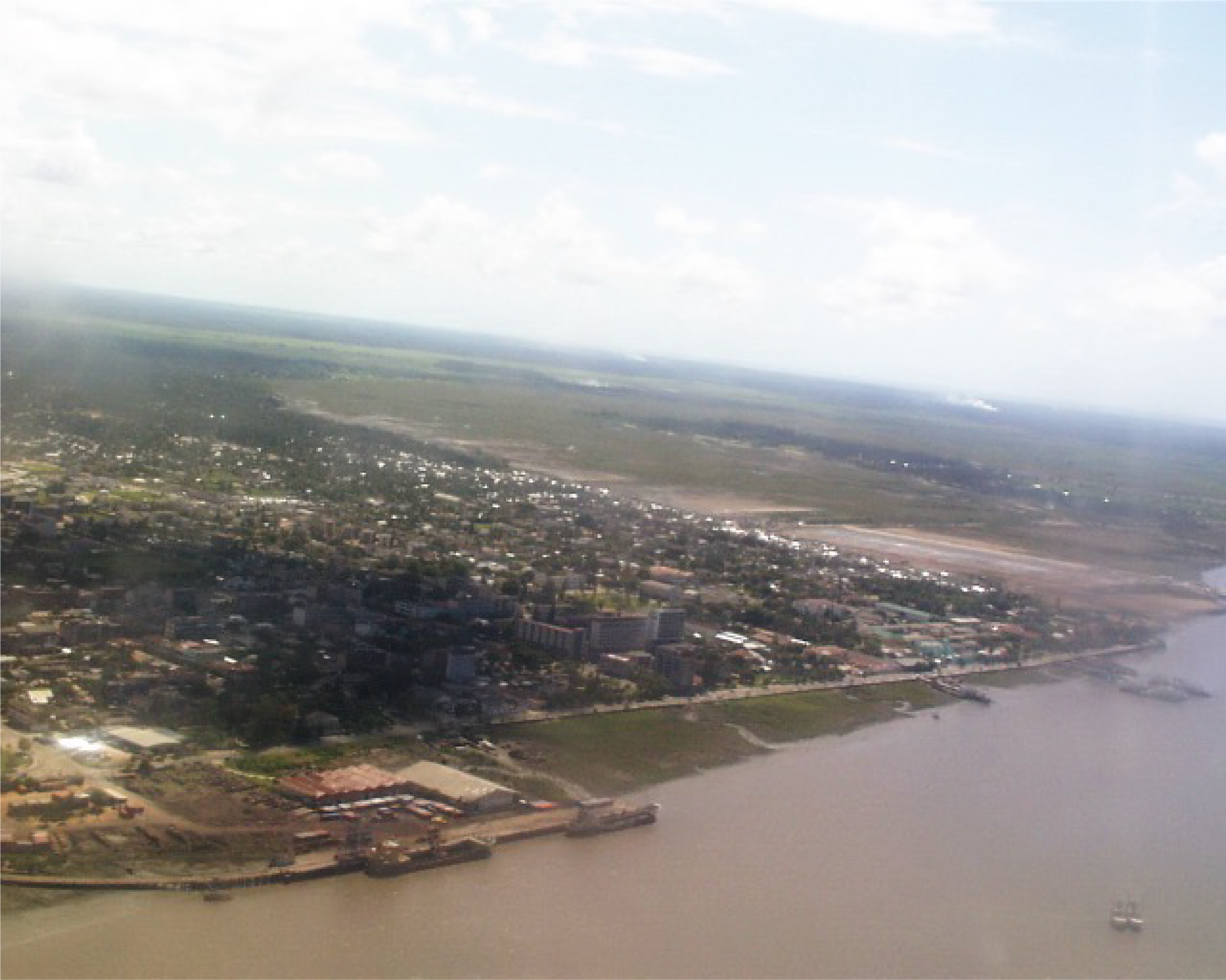
A partial air view of the City of Quelimane

My driver was so shaken with all the events that he was not able to safely drive.

I told him to move to the back seat and it thus happened that “a minister was driving with his bodyguard beside him and, sitting on the protocolar honour seat, on the back, was his driver”.

On Sunday morning on the tarmac of the Quelimane airport, there I was dressed in a suit and head covered by a Panama hat, on the line of officials welcoming President Joaquim Chissano, as he stepped out of his plane.

A week later, back in Maputo, I met the Prime Minister, briefing him on my odyssey and he followed by checking that the government played its role in ensuring that the Mozambican citizens who had been demobilized from the Renamo military ranks were provided the package due for former combatants.

Sobre o Autor

* The author is a Civil and Sanitary Engineer and was an Eduardo Mondlane University Professor in the Department of Civil Engineering of the School of Engineering.

Footer Responsivo
EN